
Understanding the Heating Principle
An invisible induction system uses electromagnetic induction to heat compatible cookware positioned above the concealed heating zone.
The system typically consists of several key components:
1. Induction Coil
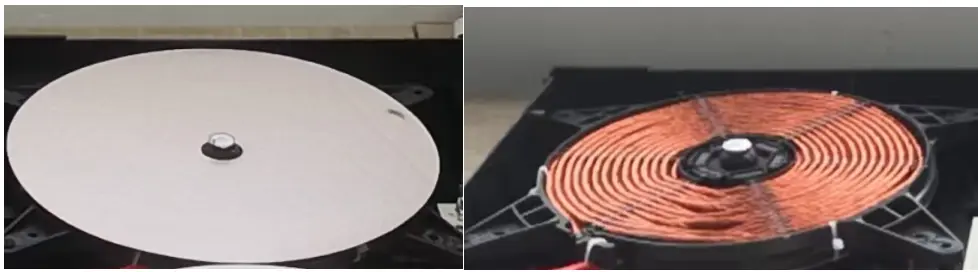
The induction coil generates an alternating magnetic field when supplied with the appropriate electrical current. This field passes through the compatible countertop material and interacts with suitable cookware.
2. Electronic Control Board (PCB)
The PCB and associated power electronics control the induction system’s operating functions, including power regulation and relevant protection mechanisms, according to the selected model.
3. Compatible Cookware
Induction-compatible cookware receives energy from the magnetic field and generates heat within the cookware itself. The cookware then transfers heat to the food.
4. Countertop Surface
The countertop forms the invisible cooking surface. It must have suitable electromagnetic properties and meet the product’s mechanical, thermal and installation requirements.
5. Cooling and Ventilation System
The concealed heating module generates internal heat during operation. Appropriate ventilation and heat dissipation are essential for stable performance and component protection.
When these components are correctly matched and installed, the system enables induction cooking without a conventional visible glass hob.
Related Invisible Induction Guidance
Review the complete invisible induction hob guide for model and installation requirements. To understand the hardware behind the surface, see how the main components work together.