
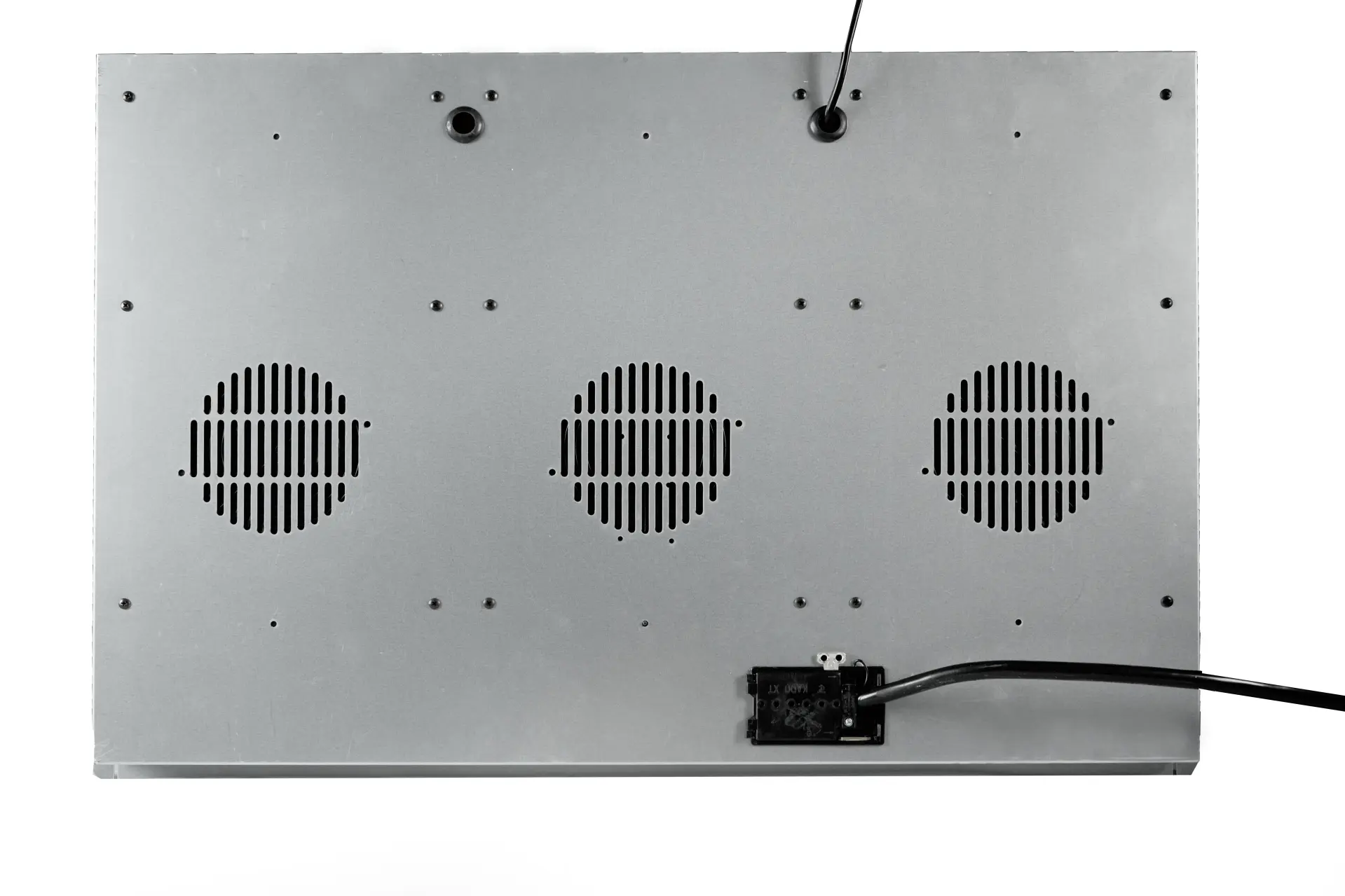
Designed for Reliable Operation Beneath the Countertop
Although induction heating primarily generates heat in the cookware, the concealed electronics and power components also produce heat during operation.
A properly designed installation must allow the heating module to dissipate this heat within the limits specified by the manufacturer.
Important design considerations include:
Airflow and Ventilation
Provide the required air inlet, outlet and ventilation path. Do not block cooling openings or enclose the module in a space that does not meet the installation requirements.
Installation Space
The cabinet or island structure must provide sufficient space for the heating module, electrical connections, ventilation and maintenance access.
Surrounding Materials
Materials near the module must be suitable for the temperatures and conditions specified in the approved installation documentation.
Operating Environment
Ambient temperature and installation conditions must remain within the limits specified for the selected model.
Thermal Validation
Where required, the complete assembly should be evaluated under representative operating conditions to verify that the countertop, module and surrounding components remain within their specified limits.
The required ventilation dimensions, operating temperature limits and minimum clearances must be taken from the approved technical documentation for the specific model.
Related Invisible Induction Guidance
Review the invisible induction hob installation guide before selecting a model. Thermal planning should also be coordinated with installation structure and design.